Home / Reading Paint Failure on a Pasadena Home: Chalking, Peeling, Cracking and Fading
What Chalking, Peeling, Cracking and Fading Tell You About Your Exterior Paint
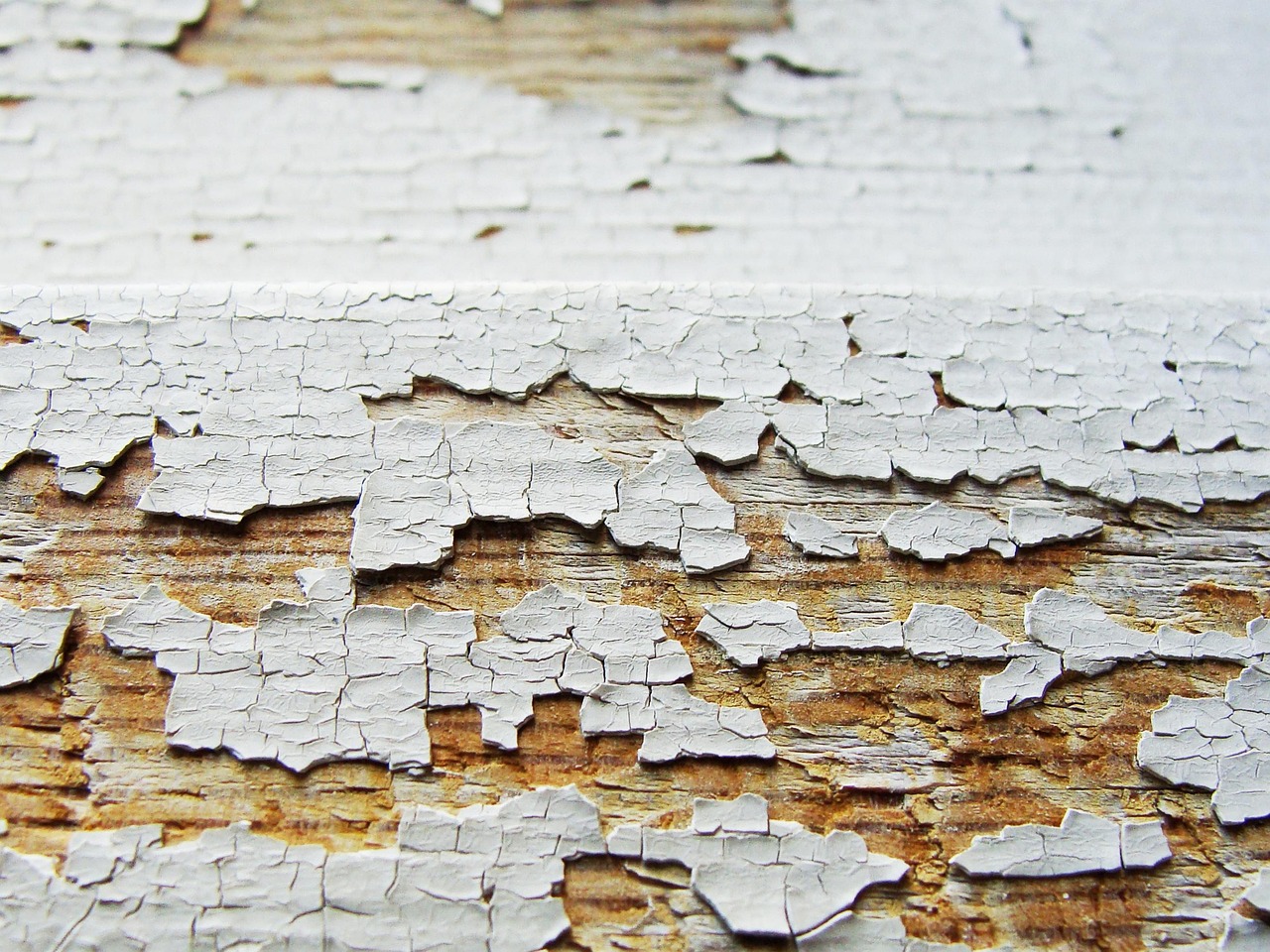
Paint rarely fails for no reason. Each type of breakdown leaves a pattern, and the pattern points to a cause. Learning to read those patterns matters because the cause decides the fix. Chalking caused by sun needs a thorough wash and a fresh coat. Peeling caused by water needs the water source found and stopped, or the new paint will peel in the same spot. This guide walks through the failures you are most likely to see on houses around Pasadena, where strong sun, hot summers and seasonal rain do most of the damage, and explains what each one is telling you.
Chalking
Chalking is the fine powder that comes off on your hand when you rub a painted wall. It forms when ultraviolet light breaks down the binder at the surface of the film, freeing pigment particles that are no longer held in place. All exterior paints chalk to some degree as they age, and some older formulations were designed to chalk slowly so the surface would self-clean in rain. In Pasadena, where sun exposure is heavy for most of the year, chalking is often the first visible sign of aging on south and west walls.
Light chalking on its own is not a crisis. It becomes a problem in two ways. First, chalk washing down a wall can streak onto brick, stone or a lower surface of a different color. Second, fresh paint applied over a chalky surface bonds to the loose powder instead of to the sound film underneath, and it will peel early. If the wipe test leaves a heavy deposit, the wall has to be washed and allowed to dry thoroughly before any recoating, and a bonding primer may be needed where chalk will not fully come off.
Fading
Fading is a loss of color intensity, and it usually shows up alongside chalking because both come from sun exposure. Some pigments hold color better than others. Many reds, bright yellows and deep blues fade faster than earth tones and whites. You will notice it most at the edges of shaded areas, behind downspouts, under eaves or where a shutter has been removed, since those spots keep their original color while the surrounding wall lightens.
Fading by itself is cosmetic, but it has a practical consequence. Once a wall has faded, a touch-up with paint from the original can will not match, because the can holds the color the wall used to be. That is why patched areas on a faded house often stand out as darker rectangles. If fading is significant, plan on recoating whole walls from corner to corner rather than spotting in small repairs.
Peeling and flaking
Peeling means the paint has lost adhesion and is lifting away from the surface beneath it. It is the most important failure to diagnose correctly because it is nearly always caused by one of a few conditions, and each needs a different response.
Moisture behind the film
Water getting into wood from behind or from an unsealed edge pushes paint off as it tries to escape. This peeling tends to show up at the bottom of walls, around windows and doors, on the lower ends of trim boards, below gutters and near sprinklers. The paint often comes off down to bare wood, and the wood underneath may look gray or feel damp. Painting over this without stopping the water only resets the clock.
Poor preparation
If paint was applied over dirt, chalk, glossy old paint that was not dulled, or bare wood that was never primed, it will peel in a more random pattern, often in sheets, sometimes revealing a clean layer of old paint underneath. This is a failure of the previous job, and it means the loose material must be removed down to a layer that is firmly bonded.
Incompatible layers
Latex paint applied directly over old oil-based or alkyd enamel without proper preparation can fail to grip, especially on trim and doors. The top layer may peel away cleanly from the glossy layer beneath. A simple test is a small piece of tape pressed firmly onto a scored area and pulled quickly. If paint comes away on the tape, the bond between coats is weak.
Cracking, checking and alligatoring
Cracking describes splits through the paint film. When the cracks are fine and shallow, running in a grid or along the grain, they are often called checking. When they form a deep pattern of irregular plates that looks like reptile skin, the term is alligatoring.
These failures come from the paint film becoming too hard and brittle to move with the surface beneath it. Wood swells and shrinks with heat and moisture, and a film that has lost its flexibility splits instead of stretching. Heavy buildup of many old coats makes this more likely, and old oil paints are especially prone to it as they age. Alligatoring on older Pasadena homes often signals decades of layers, sometimes including lead-based paint on houses built before 1978.
Shallow checking can sometimes be sanded smooth and recoated. Cracks that go through to the substrate let water in and will keep spreading. Severe alligatoring usually means the old paint must be removed down to a stable layer or bare substrate before anything new will last, and with older homes that removal should be handled with lead-safe methods.
Blistering
Blisters are bubbles in the paint film. To find the cause, cut one open with a sharp knife. If there is bare wood or stucco at the bottom, moisture from inside the wall or the substrate pushed the paint away. If there is an older layer of paint at the bottom, the blister most likely formed from heat, usually when paint was applied in direct hot sun or on a surface that was too warm, trapping solvent that tried to escape. Heat blisters are common on dark colors applied to west walls in summer. Moisture blisters point back to the same water sources that cause peeling.
Staining that looks like paint failure
Several stains can be mistaken for paint breakdown, and treating them as paint problems wastes effort.
- Mildew. Dark gray, green or black speckles, usually on shaded, damp surfaces such as north walls and areas under dense trees. Place a drop of diluted household bleach on a spot. If it lightens within a minute or two, it is mildew rather than dirt.
- Rust streaks. Reddish brown runs below nail heads or metal fasteners mean the fasteners are corroding. The nails need to be set, spot primed with a rust-inhibiting primer, and filled.
- Tannin bleed. Brown or yellow blotches on light paint over redwood or cedar come from natural extractives in the wood rising through the film. A stain-blocking primer is required before repainting.
- Efflorescence. White, crusty deposits on stucco or masonry are mineral salts carried out of the wall by moisture. They signal water moving through the wall and must be cleaned off and the moisture source addressed before paint will stick.
- Mineral spotting. Chalky white rings or spots at a consistent height usually come from irrigation water, which leaves minerals behind as it dries.
Putting the diagnosis to work
Walk the house and note each failure you find, where it is, and how large an area it covers. Group them by cause. Sun damage on the south and west walls is a repainting question. Peeling concentrated at the base of walls and around openings is a water question first and a painting question second. Deep cracking and alligatoring are preparation questions that will drive the scope of the next job. Once the causes are sorted, you know which problems a fresh coat will solve and which ones need a repair, a sprinkler adjustment or a new gutter before paint is worth applying.